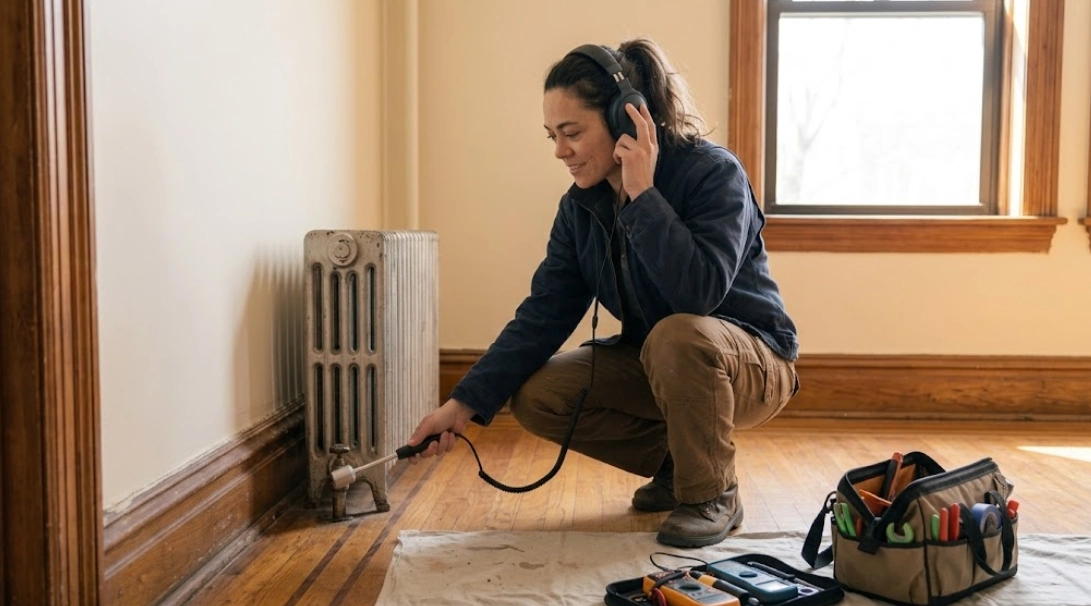
Concealed water leaks create progressive structural damage, rotting wooden joists, destroying plaster ceilings, and fostering toxic mold growth long before moisture breaches painted surfaces. In the densely populated pre-war apartment buildings, multi-family brownstones, and brick walk-ups across Mount Hope, Bronx, water frequently travels along floor joists, appearing dozens of feet from the true plumbing defect. At NY Plumbing, our leak detection in Mount Hope Bronx pairs non-destructive testing equipment with experienced mechanical diagnostic protocols to locate leaks without destructive demolition.
Common Signs of Hidden Water Leaks
Property owners, landlords, and building superintendents frequently encounter warning signs indicating an active concealed pipe leak:
- Ceiling Stains & Bubbling Plaster: Brown water rings, soft drywall, or peeling paint beneath bathrooms indicate an active ceiling leak repair Mount Hope Bronx emergency.
- Water Leak From Upstairs Apartment: Inter-floor water migration is widespread in multi-family pre-war buildings. A deteriorated wax ring under an upstairs toilet, cracked bathtub overflow gasket, or leaking riser triggers a water leak from upstairs apartment Mount Hope Bronx dispute.
- Sudden Spikes in Quarterly Water Bills: Continuous high consumption on your NYC Department of Environmental Protection (DEP) bill without increased usage points toward a pressurized pipe breach.
- Musty Odors & Hidden Mold Growth: Persistent damp smells inside utility chases or behind baseboards indicate an ongoing leak in wall detection Mount Hope Bronx scenario.
- Spinning Low-Flow Meter Dial: When every faucet, toilet, and valve in the building is shut off, the flow indicator on your water meter should remain motionless. Continuous rotation confirms an active leak.
Non-Invasive Diagnostic Technologies
Tearing open multiple walls on guesswork is costly, disruptive, and messy. We utilize state-of-the-art diagnostic instruments for hidden water leak detection Mount Hope Bronx:
Infrared Thermal Imaging: Thermal imaging cameras detect subtle surface temperature differentials on walls and ceilings. Because evaporating water absorbs heat, hidden moisture plumes register as distinctive cool blue thermal footprints, allowing technicians to trace the water path directly to its source.
Acoustic Listening Sensors: Water escaping through a pinhole in pressurized copper, brass, or galvanized piping produces a distinct high-frequency hissing vibration. Ground microphones and acoustic listening discs amplify this sound through solid floors, concrete slabs, and plaster walls to isolate the leak location to a targeted square foot.
Non-Destructive Moisture Meters: Calibrated electronic pinless moisture meters measure relative moisture levels deep within wood framing, plaster, and subfloors without puncturing or damaging finish surfaces.
Water Stains on Ceilings or Unexplained Water Loss?
Speak directly with an experienced plumbing diagnostic specialist to discuss non-invasive leak isolation for your home or multi-family building.
Supply Line Leaks vs. Drain Line Failures
An essential diagnostic step is isolating which mechanical piping network is compromised:
- Pressurized Domestic Water Supply: Fresh water lines operate under constant 50–70 PSI. A pinhole in pressurized piping leaks continuously 24 hours a day. Pressure decay testing on isolated branches confirms or eliminates supply lines immediately.
- Gravity Drain & Waste Piping: Drain stacks, sink traps, and shower drains leak only when fixtures are actively in use or draining. Systematic flood testing of individual fixtures isolates leaking traps.
- Hydronic Heating Loops: Closed-loop boiler heating pipes embedded in floors or ceilings lose operating pressure on the boiler's pressure gauge when a leak occurs, connecting with our primary boiler repair in Mount Hope diagnostic services.
Apartment Leak Detection & Multi-Family Coordination
Handling an apartment leak detection Mount Hope Bronx investigation in multi-family properties near Grand Concourse or East 176th Street requires diplomatic communication between upstairs and downstairs residents. We work respectfully with building superintendents and tenants, performing clean dye testing, trap inspections, and thermal sweeps to establish the exact source without assigning premature blame before scientific testing is complete.
If moisture issues involve utility tanks or underground building drain lines, explore our dedicated drain cleaning and sewer line repair solutions. Learn more about our service territory on our Service Areas page.
Frequently Asked Questions About Leak Detection
How can I tell if a ceiling leak is coming from a pressurized pipe or a drain line?
Pressurized water supply lines leak constantly at a steady drip rate 24 hours a day, regardless of whether plumbing fixtures are in use. Drain-line or fixture trap leaks occur intermittently—typically right after an upstairs neighbor showers, drains a bathtub, or runs a washing machine.
Can concealed pipe leaks behind plaster walls be located without demolition?
Yes. Non-invasive diagnostics deploy high-resolution infrared thermal imaging to identify cool moisture evaporation signatures and sensitive acoustic listening discs to hear high-frequency water hiss, narrowing the repair target to an exact wall area before opening plaster.
What should I do if my building's water meter spins continuously when no taps are on?
A constantly moving low-flow indicator on your NYC DEP water meter confirms active water loss. Common culprits include silent toilet flapper leaks, underground service line ruptures, or hidden slab leaks beneath your basement floor.