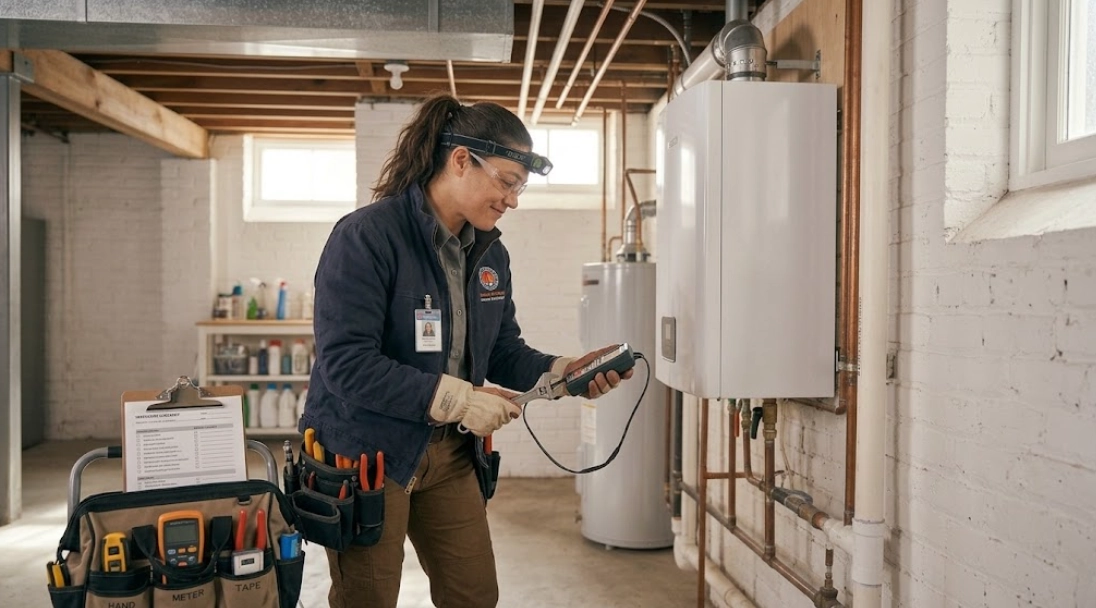
When sub-freezing winter cold grips the West Bronx, a dependable central boiler is vital to protecting the comfort, health, and structural safety of your building. Whether you own a classic brick apartment building near the Grand Concourse, manage a multi-family walk-up near Burnside Avenue, or maintain a private residence along Tremont Avenue, heating malfunctions require prompt, accurate mechanical diagnosis. At NY Plumbing, our diagnostic approach focuses on identifying the true root causes of boiler failures rather than applying temporary surface fixes.
Common Boiler Symptoms & Warning Signs in Mount Hope Buildings
Heating plants in Mount Hope endure demanding continuous duty cycles throughout the winter. Over decades of service, heavy thermal expansion, mineral scale accumulation, and electrical switch fatigue create noticeable operational symptoms:
- Total Loss of Heat: When property owners face a no heat boiler repair Mount Hope Bronx emergency, the burner fails to ignite or continuously locks out upon ignition trial, leaving cold radiators throughout the building.
- Uneven Heat Across Building Floors: Ground-floor apartments overheat while top-floor units remain shivering cold, a frequent symptom of unbalanced steam vents or failing zone circulators.
- Abnormal Boiler Operating Pressure: Pressures climbing past 30 PSI on hot-water boilers force relief valves to discharge, while steam systems operating above 2 PSI waste fuel and strain radiator valves.
- Loud Kettling, Banging, or Rumbling Sounds: Mechanical clanging resembles a boiling kettle or water hammer shock wave, indicating mineral scale baking against cast-iron heat exchangers.
- Puddles & Active Water Leaks Around the Boiler: Pooling water near the boiler base reveals corroded pipe unions, leaking circulator pump flanges, or weeping relief valve discharge lines.
When property owners encounter an unexpected boiler not working Mount Hope Bronx breakdown, prompt mechanical troubleshooting ensures pipes do not freeze and interior living spaces stay warm.
Steam Boilers vs. Hot Water Hydronic Heating Systems
Accurate diagnosis starts with identifying the thermodynamic operating principles of your heating equipment:
Steam Heating Systems: Pre-war residential buildings throughout the West Bronx rely heavily on atmospheric low-pressure steam boilers. Water boils inside the cast-iron vessel to generate steam vapor, which naturally expands upward through vertical black-iron risers into cast-iron radiators under 0.5 to 1.5 PSI of gentle pressure. Radiators vent room air through thermostatic vents, condense the steam back into water, and return the liquid via gravity down to the boiler. If radiators are knocking or staying cold, specialized steam heat and radiator repair in Mount Hope restores venting balance and pipe pitch.
Hot Water Hydronic Systems: Closed-loop hydronic boilers heat water to 160°F–180°F without boiling. Motorized circulator pumps propel this water through copper or PEX tubing into finned baseboard convectors or radiant floor loops under a steady 12 to 15 PSI of static pressure.
Technicians performing steam boiler repair Mount Hope Bronx inspect water sight glasses, skim taps, pigtail siphons, and low-water cutoffs, while those providing hot water boiler repair Mount Hope Bronx focus on expansion tanks, zone valves, air purgers, and pump relays.
Boiler Not Firing or Radiators Staying Cold?
Speak directly with an experienced heating technician who understands pre-war steam loops and modern hydronic heating plants.
Why Older Bronx Buildings Experience Boiler Breakdowns
Mount Hope is characterized by substantial pre-war apartment buildings, masonry multi-family homes, and historic residences situated along prominent corridors like the Grand Concourse, East 175th Street, and Jerome Avenue. These properties present unique mechanical conditions:
- Low-Water Cutoff Accumulation: In steam boilers, float-chamber low-water cutoffs collect sediment and rust flakes over decades. When silt prevents the internal float from dropping, or jams the electrical microswitch, the burner either dry-fires dangerously or shuts off completely.
- Clogged Pressuretrol Siphons: The curved brass pigtail siphon connecting the pressuretrol switch to the boiler protects the control diaphragm from live steam. When soot and mineral scale clog the narrow siphon tube, the control cannot sense pressure drops, causing burner short cycling.
- Leaking Temperature & Pressure Relief Valves: When thermal expansion tanks become waterlogged in hydronic systems, water expands without cushion, repeatedly forcing the 30 PSI safety relief valve to discharge.
- Burner & Ignition Degradation: In natural gas boiler repair Mount Hope Bronx systems, lint and dust clog primary burner aeration ports, producing yellow sooting flames, rollout trips, and carbon monoxide risks.
- Circulator Bearing Seizures: Worn motor bearings or blown run capacitors on circulating pumps prevent hot water from reaching upper-floor apartments.
What to Expect During a Professional Boiler Inspection & Repair Visit
When an experienced technician evaluates your heating system, diagnostics follow a meticulous, multi-step engineering protocol:
- Initial System Assessment: Verifying thermostat calling signals, testing electrical supply voltage, checking emergency shutoff switch continuity, and assessing gas supply pressure.
- Safety & Limit Control Verification: Testing low-water cutoffs under active water blowdown, checking draft-hood spill switches, and inspecting pressure relief valves for structural integrity.
- Combustion & Ignition Evaluation: Testing pilot assemblies, electronic ignition modules, gas control valves, and burner flame characteristics to ensure clean combustion without sooting.
- Hydronic or Steam Circuit Verification: In steam setups, evaluating sight-glass water stability, skimming ports, and basement main vents; in hydronic systems, checking static pressure, expansion tank air pre-charge, and motorized zone valve operation.
- Precision Component Repair & Cycling: Replacing defective controls with manufacturer-compatible parts and cycling the boiler through complete heating runs while verifying heat delivery across radiators.
Repair vs. Replacement: Practical Considerations
We prioritize targeted mechanical repairs whenever equipment can be restored safely and reliably. Replacing individual components—such as a modern electronic ignition module, aquastat, circulator pump, or pressuretrol—is cost-effective and restores full operation.
However, when a cast-iron boiler is 25 to 30 years old and develops internal cracked heat exchanger sections from metal fatigue, repairing the casting is neither structurally feasible nor code-compliant. In such circumstances, exploring complete boiler replacement in Mount Hope provides modern fuel efficiency, dependable comfort, and full New York City Department of Buildings code compliance.
Safe Steps While Waiting for Professional Help
While awaiting a technician, observe these essential safety precautions:
- Do Not Disassemble Gas Controls: Never attempt to adjust gas pressure regulators, disassemble burner trays, or wire around electrical safety limits.
- Do Not Pry Dripping Relief Valves: Never manually force open a leaking pressure relief valve on a pressurized boiler, as scalding water or steam can discharge violently.
- Check Basic External Switches: Confirm that the emergency power switch at the cellar entrance is switched ON and that your thermostat has fresh batteries.
- Emergency Power Switch: If the boiler emits smoke, violent banging, or excessive rumbling, locate the red emergency burner switch and switch it to the OFF position.
Urgent Gas Odor Safety Protocol
If you smell natural gas (a pungent rotten-egg sulfur odor) or suspect a gas leak: Immediately evacuate all occupants and pets from the building. Do not operate light switches, flashlights, or electrical devices. Once safely outdoors at a distance, call 911 or the gas utility emergency dispatch (Con Edison) immediately. Never attempt to locate or repair a gas leak yourself.
Related Residential & Multi-Family Services in Mount Hope
In addition to central boiler repairs, our team provides comprehensive mechanical support across the West Bronx:
Boiler Replacement
Accurate heat-loss sizing calculations, oil-to-gas conversions, and code-compliant installations when older heating plants reach the end of their operational lifespan.
Explore Replacement →Steam Heat & Radiator Repair
Eliminate knocking water hammer, balance sluggish radiators, and replace leaking angle valves and air vents across pre-war multi-family properties.
Radiator Services →Water Heater Repair
Troubleshoot no-hot-water emergencies, faulty thermocouples, leaking relief valves, and indirect domestic water storage tanks piped to boilers.
Water Heater Services →Gas Line Repair & Inspection
Certified pressure testing, gas piping repairs, appliance hookups, and professional guidance regarding NYC Local Law 152 periodic inspections.
Gas Line Inspection →Leak Detection
Acoustic and thermal diagnostics to pinpoint hidden water leaks inside walls, ceilings, and risers between stacked apartments without unnecessary wall damage.
Pinpoint Leaks →Drain Cleaning
Mechanical cable snaking and clog removal for grease-choked kitchen lines, bathroom traps, and slow branch drains in older homes.
Drain Clearing →Sewer Line Repair
High-definition video sewer camera inspections, root intrusion clearing, and structural repair for underground clay and cast-iron building sewer laterals.
Sewer Line Repair →Serving Mount Hope and Nearby West Bronx Neighborhoods
Our heating technicians assist homeowners, landlords, and building superintendents across Mount Hope and adjacent West Bronx communities. Whether you need boiler repair near Tremont (west), responsive service near boiler repair near Grand Concourse, or heating diagnostics for multi-family homes requiring boiler repair near University Heights, our team provides reliable local support. Visit our Service Areas page for full geographic details.
Frequently Asked Questions About Boiler Repair
Why is my boiler firing normally but radiators remain lukewarm or cold?
In steam heating systems common to Mount Hope pre-war buildings, this issue typically stems from clogged radiator air vents, improper sight-glass water levels, or an inaccurate pressuretrol setting that cycles the burner off prematurely. In closed-loop hydronic systems, air trapped in baseboard convectors, a defective circulator pump, or a stuck zone valve blocks heated water circulation.
What causes sudden boiler burner lockouts during freezing Bronx winter nights?
Burner lockouts occur when internal safety limit switches detect hazardous operating conditions. Frequent triggers include oxidized flame sensors, worn thermocouples, draft-hood spill switches reacting to chimney downdrafts, or a low-water cutoff preventing dry firing when boiler water levels drop.
Can an active leak on a boiler be repaired or is full replacement necessary?
If water is dripping from threaded black-iron pipe fittings, circulator pump flanges, automatic feed valves, or the 30 PSI pressure relief valve, component repair is straightforward. However, if cast-iron heat exchanger sections have developed thermal stress fractures, repair is structurally unsafe and requires heating plant replacement.
What basic steps should I check before scheduling a boiler service visit?
Ensure your thermostat is set to heat and above current room temperature, check that the emergency red burner toggle switch at the cellar door is in the ON position, inspect the sight glass on steam boilers to confirm water is half to two-thirds full, and verify the main gas line shutoff handle is parallel to the pipe.